
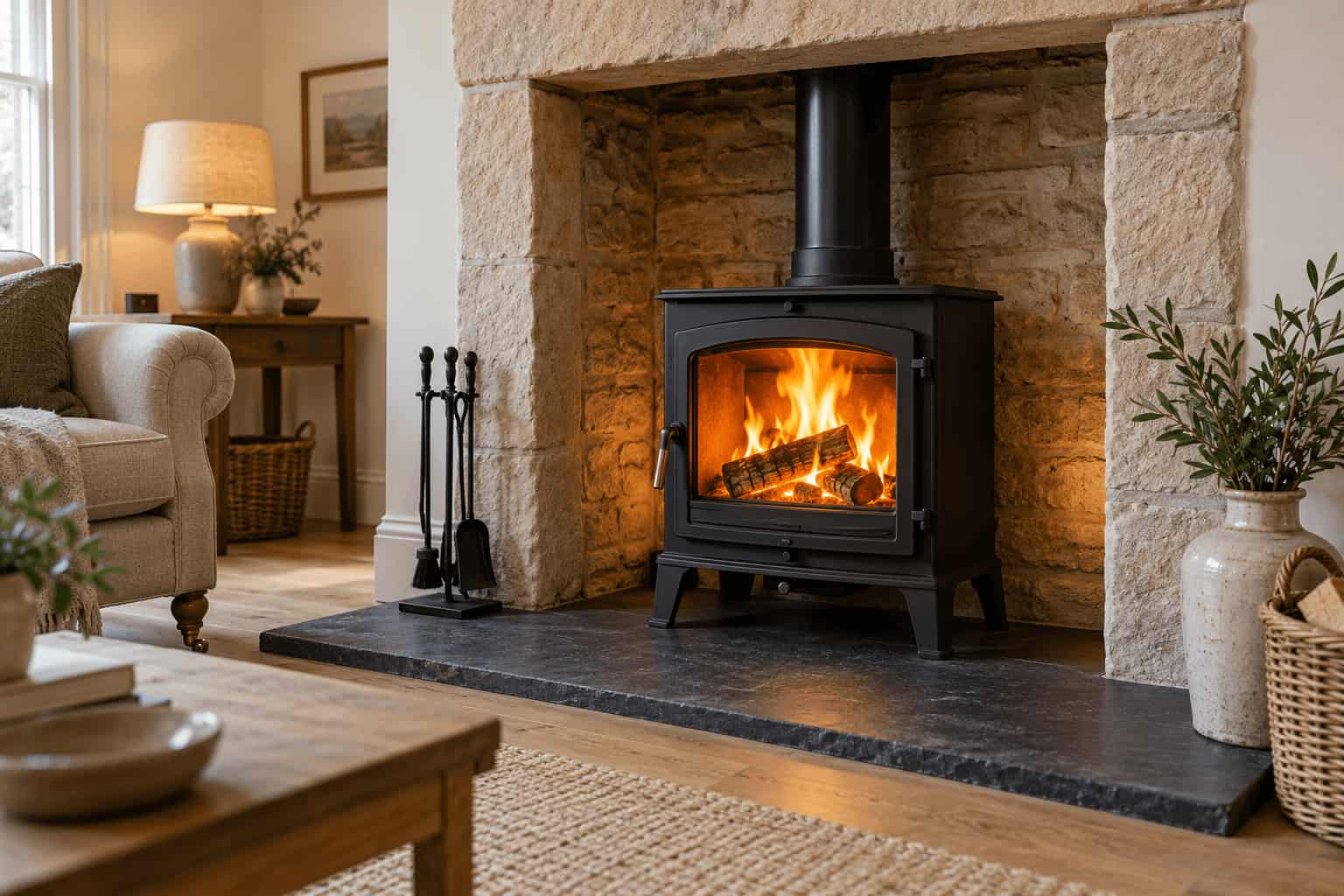
A log burner installation adds warmth and a real focal point to your home, however it is also a job covered by strict safety rules in the UK. However a poorly fitted stove, flue or ventilation setup can lead to carbon monoxide leaks, chimney fires and problems with your home insurance.
In the UK, the average log burner installation costs £1,500 to £4,000 where there is a working chimney, rising to £3,500 to £6,500 if you need a new flue system fitted. Your stove must meet Ecodesign standards, the installation must comply with Building Regulations, and if your property is in a smoke control area, the appliance also needs to be Defra exempt.
This guide breaks down what you can expect to pay, which rules apply to your property, how installation works on the day and what to check before you book a specialist. If you are ready for quotes now, TradeWatch can connect you with a vetted, insured log burner installer in your area.
In this guide
How much does log burner installation cost in the UK?
Most homeowners will pay between £1,500 and £4,000 for a supplied and fitted log burner using an existing chimney. Without a chimney, a twin wall flue system can push that total up to £3,500 to £6,500.
| Cost item | Typical price (2026) |
| Stove (5kW Ecodesign, mid-range) | £800 to £1,500 |
| Installation labour | £400 to £800 |
| Stainless steel flue liner, supplied and fitted | £400 to £1,000 |
| Hearth | £300 to £1,200 |
| Chimney cowl | around £200 |
| Total with existing chimney | £1,500 to £4,000 |
| Total with new twin wall flue | £3,500 to £6,500 |
What affects the price: the condition of the chimney, length of flue, scaffolding needs, hearth size and whether your stove must be Defra exempt. A chimney that needs rebuilding can easily singlehandedly add over £2,000.
Running costs are modest. Seasoned logs cost around £60 to £100 per cubic metre, so most households spend £300 to £500 a year on fuel.
Sources: Less.co.uk, Trade2Base, Book A Builder UK, Yorkshire Evening Post
Log burner regulations: what the law requires
Fitting a log burner is notifiable building work in England and Wales. It must comply with Approved Document J of the Building Regulations, and you need proof it does.
Building Regulations sign off. A HETAS registered installer can self-certify the job and issue a compliance certificate. If you use anyone else, you must notify your local building control before work starts and pay their inspection fee. Keep the certificate: solicitors and home insurers ask for it.
Carbon monoxide alarm. Since October 2022, any new solid fuel appliance in England needs a CO alarm fitted in the same room.
Ecodesign. Every new wood burning or multi fuel stove sold since 1 January 2022 must meet Ecodesign emissions and efficiency standards.
Smoke control areas. Most UK towns and cities are smoke control areas. Inside one, you can only burn wood on a Defra exempt stove, and new stoves there must now emit no more than 3g of smoke per hour, down from 5g. Councils can issue civil penalties of £175 to £300 for excess smoke. Check your postcode on the Defra smoke control area map before choosing a stove.
Fuel rules. Since 2023 it has been illegal in England to burn house coal or wet wood at home. Use logs with under 20% moisture, or ideally which are labelled Ready to Burn.
Hearth and ventilation. Document J sets the hearth size and clearance to combustible materials. Stoves above 5kW usually need a permanent air vent in the room, which is one reason 5kW models are the most popular choice.
Planning permission. Most homes don’t need it. Check with your council first if you live in a listed building or conservation area, or if the flue will rise more than 1m above the highest part of the roof.
Sources: Which?, Energy Saving Trust, Richmond Council.
Can you install a log burner without a chimney?
Yes. A twin wall insulated flue can run up through the ceiling and roof, or out through an external wall and up the side of the house. It costs more than using an existing chimney but it also gives you a free choice of stove position which many homeowners value.
| Setup | What’s involved | Typical total |
| Existing chimney, in sound condition | Sweep, smoke test, flexible stainless steel liner, register plate | £1,500 to £4,000 |
| Existing chimney, in need of repair | As above plus repointing, new pots or stack rebuild | £3,000 to £6,000+ |
| No chimney, twin wall flue | Insulated flue system, roof or wall penetration, weatherproofing, often scaffolding | £3,500 to £6,500 |
Even a chimney in very good condition will almost always needs lining. A liner keeps flue gases at the right temperature, improves draw and stops tar and condensation from damaging the masonry.
How log burner installation works, step by step
A standard install into a lined chimney takes one to two days. A full twin wall flue install can take two to three.
-
- Site survey. The installer checks the chimney, measures the room, confirms whether you’re in a smoke control area and recommends a stove size. A quote based on photos alone is a red flag.
- Chimney sweep and smoke test. The flue is swept and smoke tested to find leaks or blockages before any lining goes in.
- Fireplace preparation. The opening is cleared and any lintel or brickwork repairs are made.
- Hearth installation. A non combustible hearth is fitted to the size Document J requires.
- Flue liner or twin wall flue. The liner is dropped from the roof and sealed at the top with a cowl, or the twin wall system is fitted through the roof or wall.
- Stove fitting. The stove is positioned, connected to the flue via the register plate and sealed.
- Testing and commissioning. The installer runs a final smoke and draw test, fits the CO alarm and shows you how to use the stove.
- Certification. You receive a HETAS certificate (or building control sign off) and a notice plate is fixed near the stove or meter.
After installation, get the chimney swept at least once a year or twice if you burn wood regularly.
How to choose a log burner installer
Run these checks before you accept a quote:
-
- HETAS registration, confirmed on the HETAS installer search
-
- Public liability insurance, with a copy of the certificate
-
- A written quote listing the stove, liner grade, hearth, cowl, CO alarm and certification
-
- An in person survey, not a quote from photos
-
- Recent reviews from local customers
-
- A workmanship guarantee in writing
TradeWatch does these checks for you. Every log burner installer on our platform is vetted for qualifications, insurance and customer feedback before they can quote. Tell us about your job and we’ll connect you with trusted local log burner installers.
Log burner installation FAQs
Can I install a log burner myself? You can, but the work must still pass Building Regulations. You’d need to notify building control before starting and pay for their inspection. Most homeowners find a HETAS installer cheaper and quicker overall.
Do I need planning permission for a log burner? Usually not. Listed buildings, conservation areas and flues rising more than 1m above the roofline may need consent, so check with your council.
How long does a log burner installation take? One to two days with an existing chimney, two to three days for a new twin wall flue.
Do I need a carbon monoxide alarm with a log burner? Yes. Building Regulations in England require a CO alarm in the same room as any new solid fuel stove.
Are log burners being banned in the UK? No. Log burners remain legal in 2026. New stoves must meet Ecodesign standards, and smoke control areas have stricter limits on appliances and fuel.
What size log burner do I need? Most UK living rooms suit a 4kW to 5kW stove. Your installer should calculate output from the room’s dimensions and insulation during the survey.
Is a log burner cheaper than central heating? It can be if you have cheap access to seasoned wood. For most households the saving against gas is small, so treat a log burner as a secondary heat source.
Find a vetted log burner installer
Ready to get your log burner fitted? Post your job on TradeWatch and get quotes from HETAS registered, insured installers we’ve already checked. No cold calls, no guesswork, just insured local traders.